
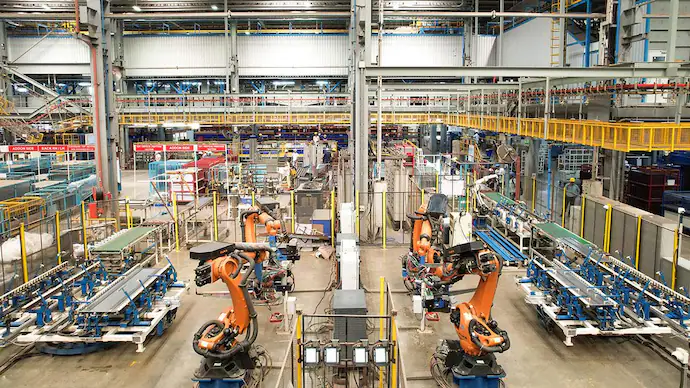
India is moving strongly toward becoming one of the top manufacturing hubs in the world. With a growing economy, large workforce, and strong government support, the country is aiming to lead global manufacturing in the coming decades. Experts say that if India continues on this path with stability and innovation, it can compete with giants like China and other advanced economies.
Why Manufacturing Matters for India
Manufacturing is the backbone of any strong economy. It creates jobs, increases exports, and supports small and big businesses. For India, this sector is very important because:
- It gives employment to millions of skilled and semi-skilled workers.
- It helps reduce imports by making products within the country.
- It boosts exports, which strengthens India’s position in the global market.
- It encourages new technology, research, and innovation.
India’s focus on manufacturing is also tied to its vision of becoming a $5 trillion economy in the near future.
Government’s Push for Growth
The Indian government has introduced many programs to encourage manufacturing. Some of the key initiatives include:
- Make in India – Launched to attract investment and promote India as a global manufacturing hub.
- Production Linked Incentive (PLI) Schemes – These give financial support to companies that set up manufacturing units in India.
- Ease of Doing Business – Faster approvals, digital systems, and reduced red tape to help companies grow quickly.
- Infrastructure Development – Modern highways, ports, industrial corridors, and logistics hubs are being developed.
These steps are helping both Indian companies and global brands to set up large factories in the country.
Opportunities for Industries
Many industries stand to gain from India’s manufacturing push:
- Automobiles: India is already one of the largest car makers. With more investment, it can export vehicles worldwide.
- Electronics: Mobile phones, laptops, and electronic parts made in India are becoming more common.
- Textiles and Apparel: India has a long history in textiles, and global demand gives a big opportunity.
- Pharmaceuticals: India is known as the “pharmacy of the world,” and manufacturing growth will strengthen this position.
- Renewable Energy: Solar panels, batteries, and EV parts are being produced at larger scales.
Challenges on the Way
While India has great potential, there are also challenges:
Also Read: Royal Enfield Classic 350 Features, Specs and Comfort Explained
- Global Competition: Countries like China and Vietnam already dominate global manufacturing.
- Skilled Workforce: India must train workers in modern technology to meet industry needs.
- Logistics and Costs: Improving transport, electricity supply, and reducing costs are essential.
- Policy Stability: Long-term, consistent policies are required to attract big investments.
Experts say that stable government support will be the key to achieving leadership in global manufacturing.
India’s Strengths
India has several advantages that make it a strong contender:
- A young population with millions of workers.
- A fast-growing domestic market with rising demand.
- Strong IT and digital backbone supporting industries.
- Strategic location for global trade, connecting East and West.
These factors give India a natural edge in becoming a global manufacturing leader.
Future Outlook
Looking ahead, India’s target is not only to meet domestic needs but also to supply the world. By 2030, experts predict India could become one of the top three manufacturing hubs globally. This will bring more jobs, higher exports, and stronger economic growth.
If industries, government, and workers all move together, India has the potential to become the world’s next manufacturing powerhouse.
Conclusion
India is aiming high with its dream of leading global manufacturing. With the right policies, modern technology, and skilled workforce, this dream can become reality. While challenges exist, the opportunities are far greater. If India stays focused, the coming decades may see the country rise as one of the strongest manufacturing leaders in the world.
Disclaimer: This article is based on current industry trends and expert opinions. Future results may vary depending on global market conditions and government policies.